

INFORMATION
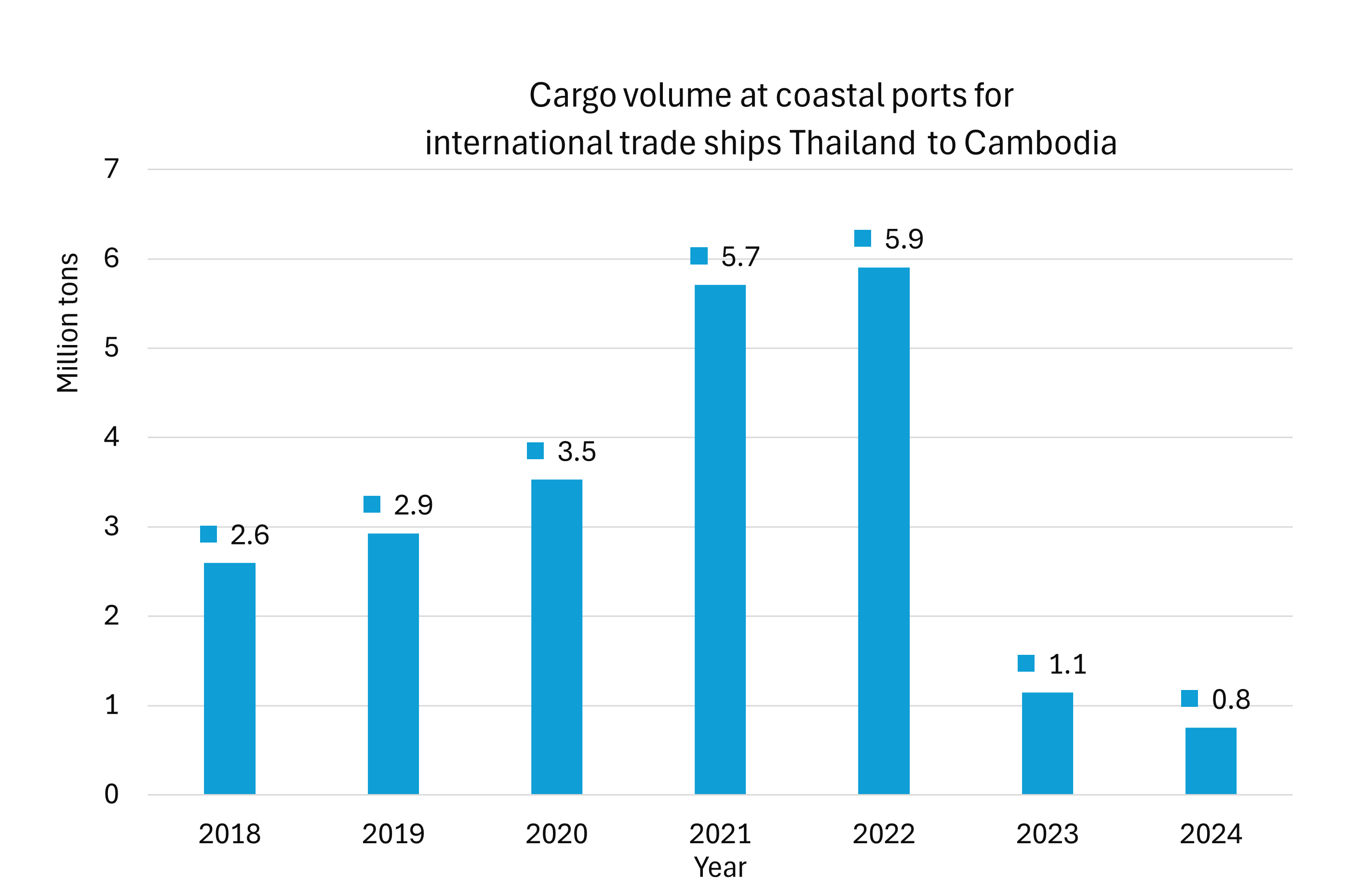
Sea export volumes from Thailand to Cambodia during 2018–2024 reflect a clear structural shift in trade and logistics patterns. From 2018 to 2022, volumes grew steadily, increasing from approximately 2.6 million tons to a peak of nearly 6 million tons in 2022, driven by expanding bilateral trade and the increased use of maritime transport as an alternative route when land transportation faced constraints.
From 2023 onward, sea export volumes declined sharply and remained at a low level in 2024. This contraction was mainly due to the normalization of cross-border land transport after COVID-19, which offered greater flexibility, shorter transit times, and lower costs for short-distance trade. Elevated maritime logistics costs, limited sailing frequency on short-sea routes, and a slowdown in Cambodia’s construction and industrial sectors further reduced the competitiveness of sea transport.
Data from : https://md.go.th/
Looking ahead to 2025, although official data are not yet available, the outlook remains highly uncertain. In addition to economic and logistics factors, potential risks related to border tensions may affect trade sentiment, cargo movements, and exporters’ logistics decisions. Overall, sea transport is expected to remain limited in the near term and should be considered a complementary rather than a primary route in strategic planning.